Case study · Sprinklr
Reimagining UX with Agentic AI
An AI co-pilot that lets enterprise teams hand off what they want done, and get there faster.

- Problem and role
- Sprinklr ran on static, point-and-click screens, so every goal became many manual steps. I led the interaction patterns and the AI co-pilot design language.
- Team and scale
- Lead Product Designer, one of 6+ designers on this work, within Sprinklr's 25+ person design team. Sept 2024 to Mar 2025. Live.
- The idea
- Keep the AI inside the workflow, and turn its advice into one-click actions.
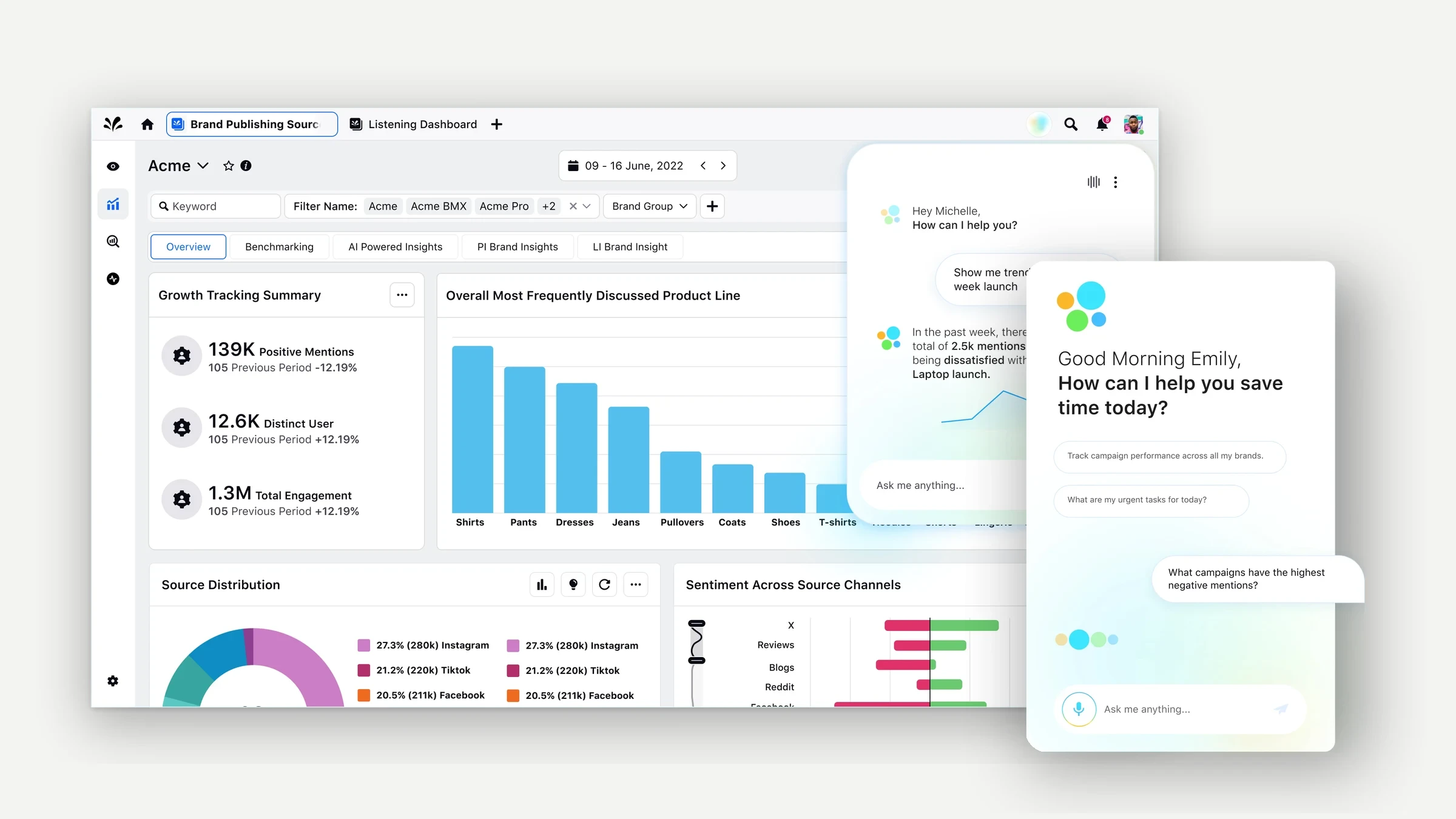
Outcome
40%
time saved on top-of-funnel tasks
95%
task success, against 75% in manual flows
+25%
NPS after launch
A separate AI page breaks focus. Help should arrive where the work already is.
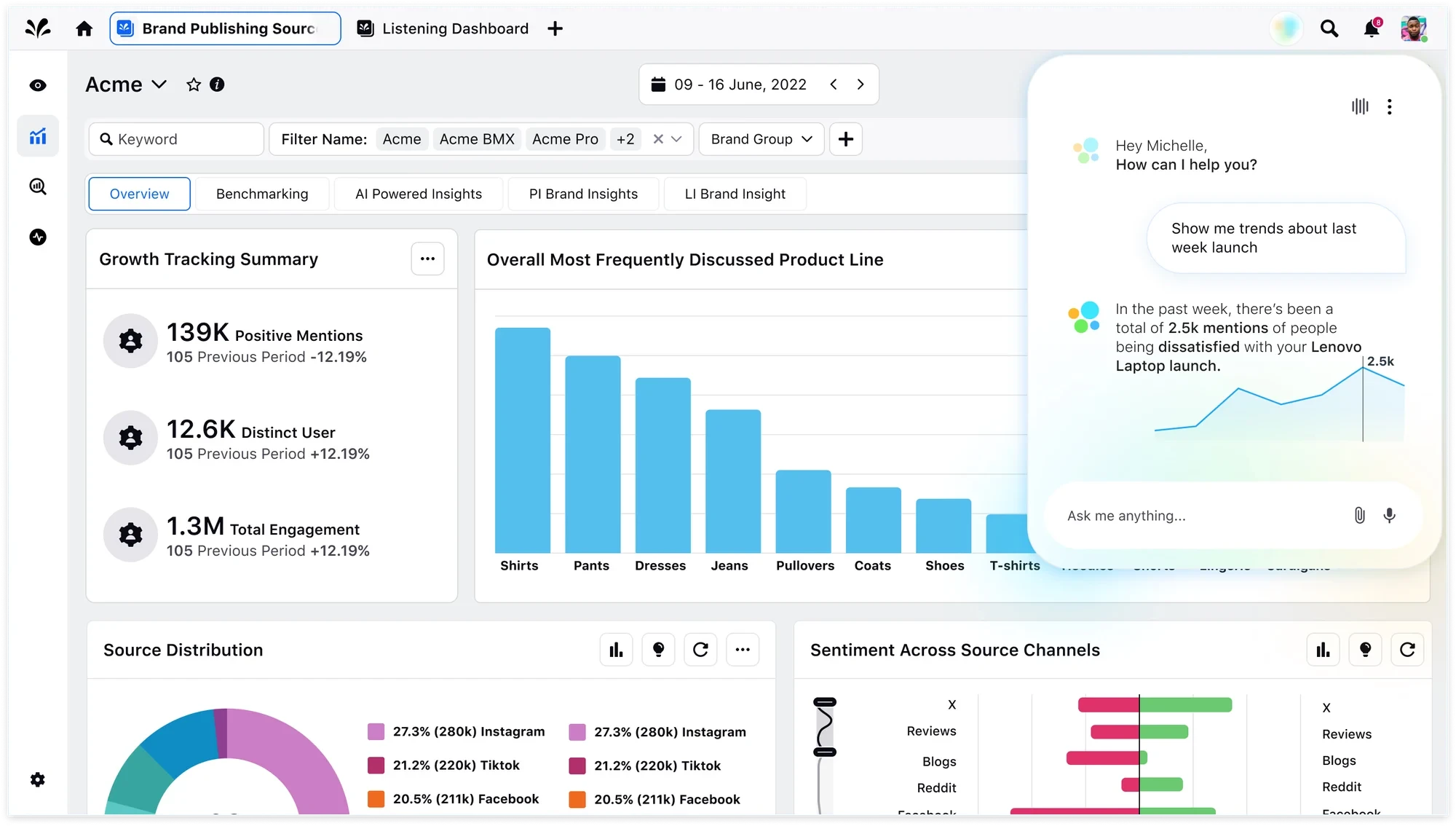
Decision 01 · Placement
Inside the workflow, not a separate destination
The co-pilot sits as a quiet pulse in the corner and opens into a side panel in one click, without taking people away from the task in front of them.
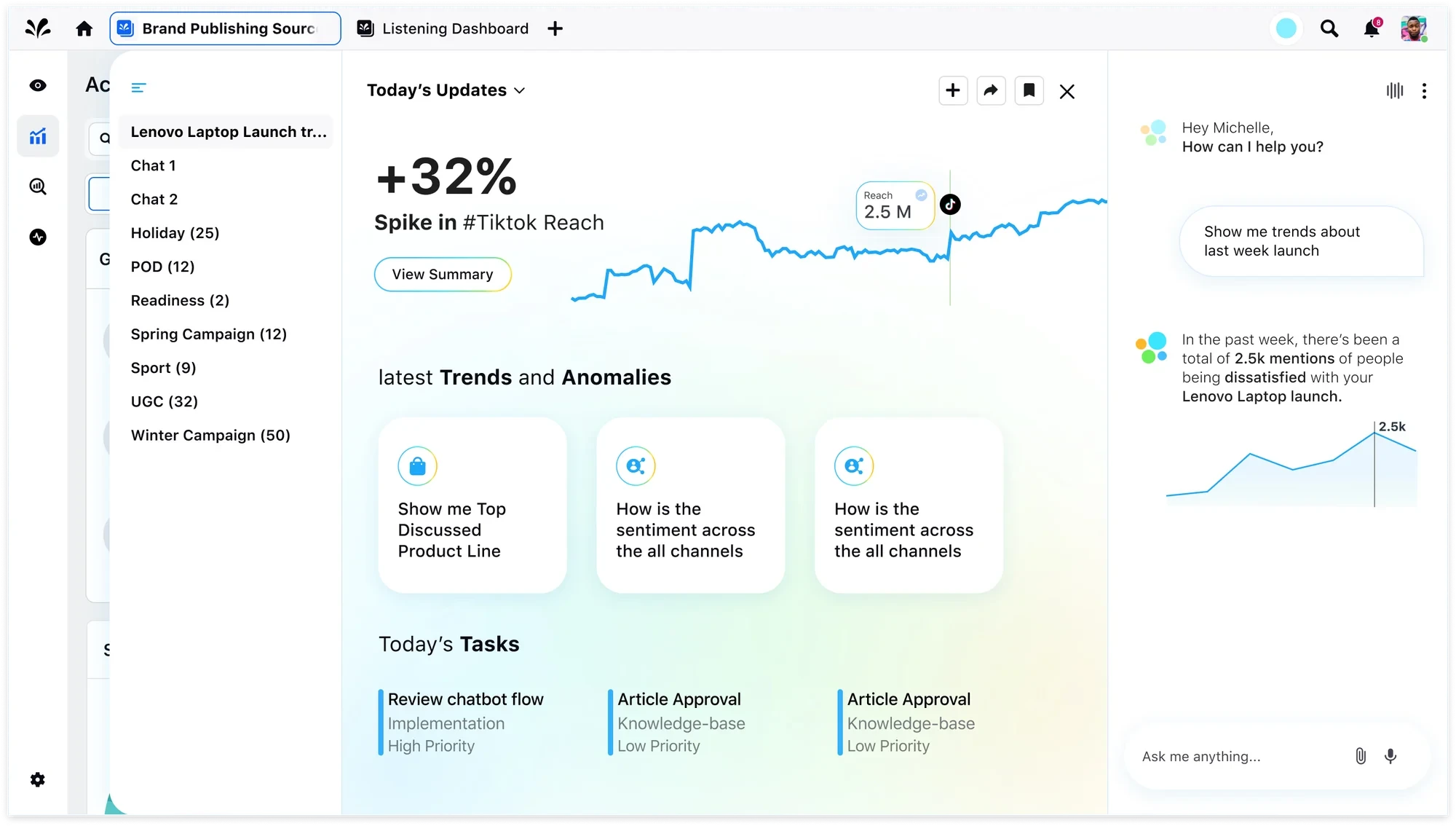
Decision 02 · Action
One-click actions, not just answers
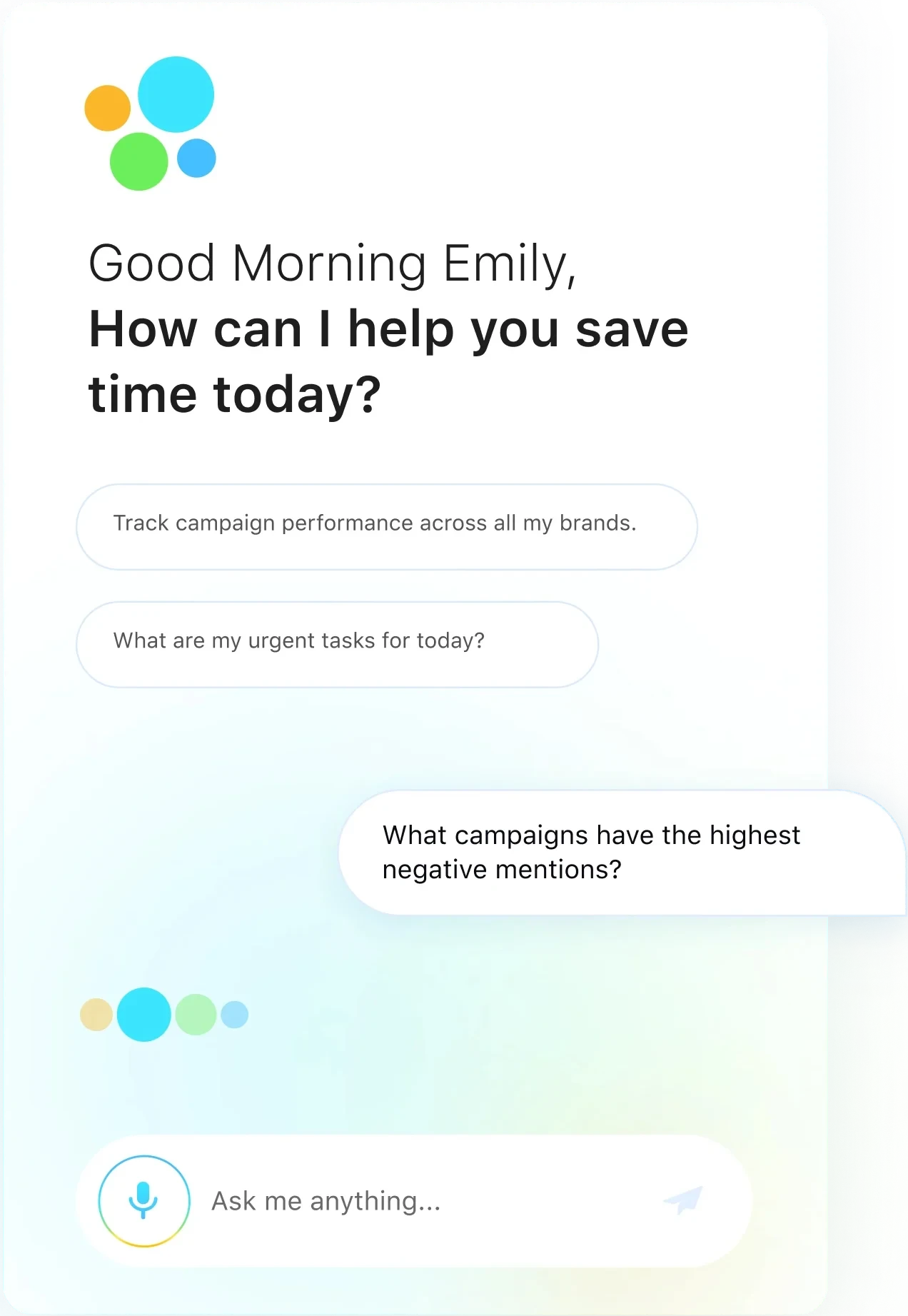
Users lose momentum when they have to turn advice into steps themselves. The co-pilot suggests the next step and lets them take it in one click.
Decision 03 · Character
An orb, not a face
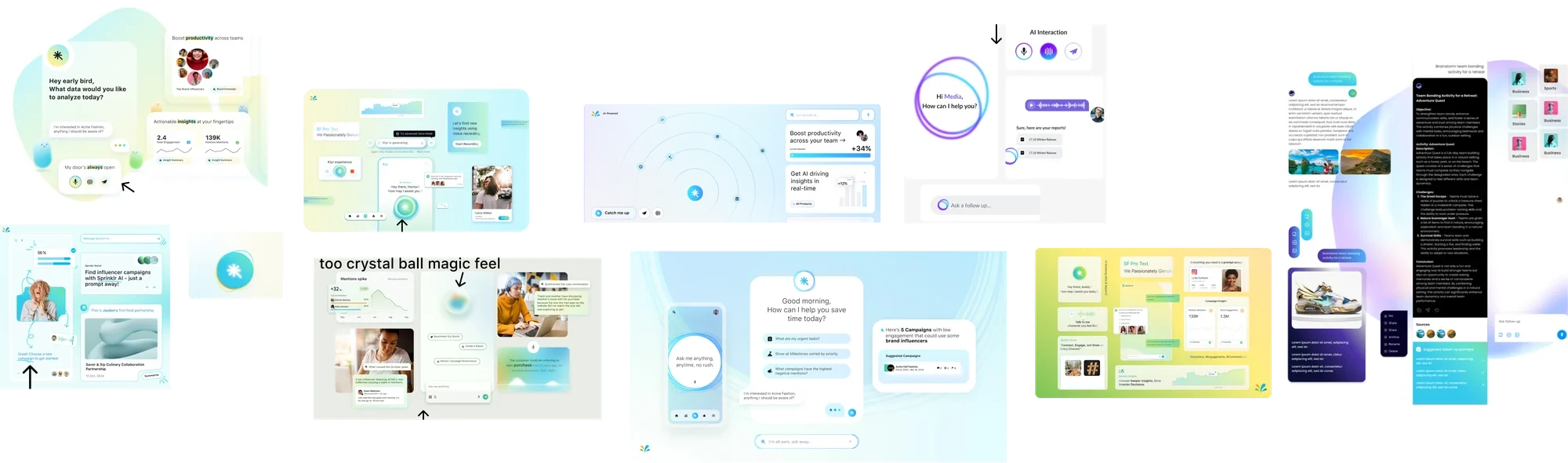
Robot faces and sci-fi gimmicks work against trust. We chose the orb, a simple form that responds through motion and colour, so the AI feels human without pretending to be one.
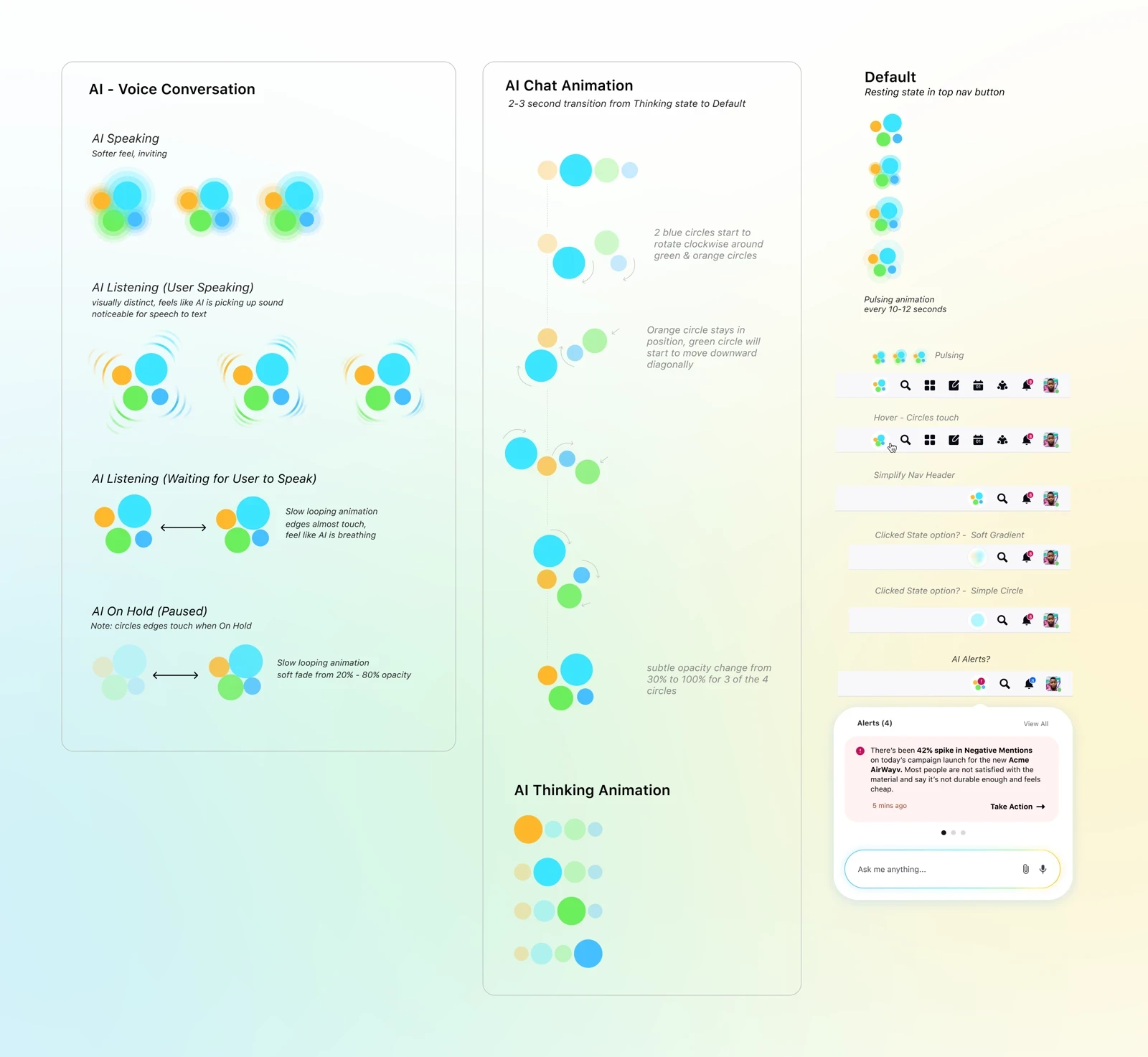
Decision 04 · Brand
Extend the brand, don't compete with it
The co-pilot needed warmth without pulling attention from the product. We extended Sprinklr's visual DNA with a friendly character and motion that guides, in a tone that stays clear and humble.
Reflection
What I learned
Context makes AI useful
Without the user's context, even a smart system becomes noise.
Protect momentum
Every step between insight and action costs energy. Remove the steps.
Trust is quiet
Visible but never demanding is what makes people rely on it.
Next case study